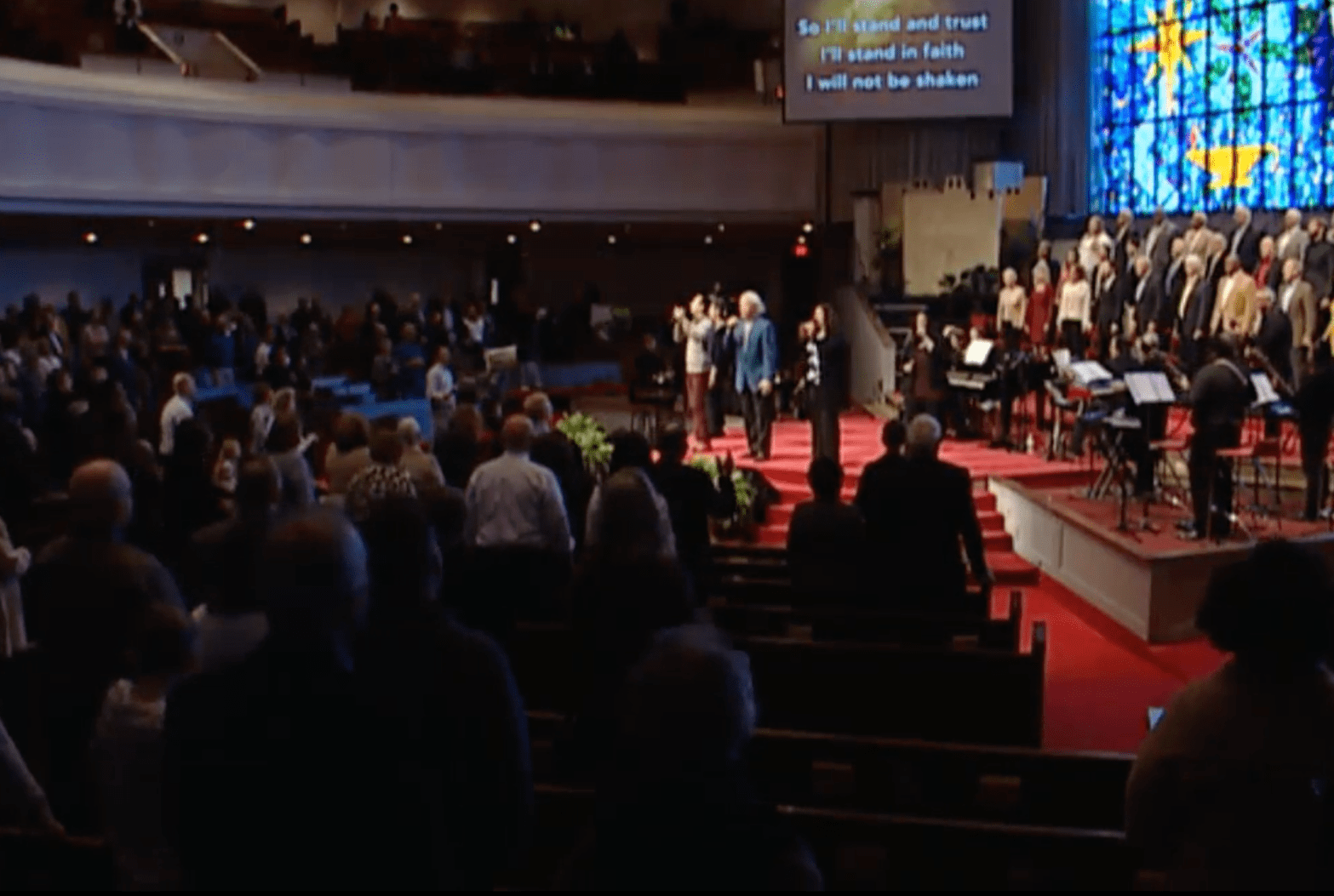
Regent University Announces School Closure in Anticipation of Florence

September 11, 2018. Virginia Beach, VA. Regent University has put out a Press Release that reads, “Due to potential impacts of Hurricane Florence, Regent University operations will close at 2 p.m. on Tuesday, September 11 and reopen no earlier than Monday, September 17.”

The entire Press Release can be read here: https://www.regent.edu/news-events/regent-university-closing-2-p-m-tuesday-september-11/

Regent goes on to state, “As Regent’s campus and surrounding areas prepare for severe winds, possible flooding due to prolonged rains, and power outages, all students living in on-campus housing are strongly encouraged to evacuate the Hampton Roads area by no later than Wednesday, September 12.”

Considering that there are over a million people in the Hampton Roads area, our sources to The Lantern & Shield Times are suggesting that people start to leave the Hampton Roads area today since there may be a grid lock on the Interstates leading out of the area. There are serval roads leading out, but the two main roads of concern are the I-64 corridor and Rt. 460.

As previously reported, the storm’s possible tracking is taking it more northwest than previously thought with the hurricane moving along the ridge of the Bermuda High, striking Central North Carolina or possibly the Outer Banks. If this occurs, it could set up Hampton Roads for high winds and massive flooding. The hurricane is predicted to go inland and possibly stalling for a day or two. This would in turn cause massive flooding inland.

Please note that the exact point of landfall cannot be determined until most likely Wednesday or Thursday. It could still move South or North. It could stay out at sea, but that is highly unlikely based on the projection models.

If you believe in prayer, now is the time to pray. Now is the time to prepare. Now is the time to evacuate.

References:

The National Hurricane Center

Regent University Press Release

Copyright © September 11, 2018. The Lantern & Shield Times, a Division of Marketplace Evangelism Ministries Inc. All Rights Reserved.

Breaking: Hurricane Florence Has Shifted to Make Landfall Near Jacksonville, NC

September 11, 2018. As of 5AM EST, Hurricane Florence appears to be riding the Bermuda High that is in place. It is expected to make landfall near Jacksonville, NC. This is based on the prediction cone and could go south or north of Jacksonville.

The current location of the storm is 410 miles South of Bermuda, traveling at 15 MPH. Wind speed is 138 MPH with gusts of 167 MPH. According to the National Hurricane Center, a mid-level ridge to the northeast of Bermuda is expected to steer Florence quickly West-Northwestward toward the Southeast United States coast over the next 2 to 3 days.

As of the writing of this story, Virginia Governor Ralph Northam has ordered a mandatory evacuation of in the Hampton Roads area and the Eastern Shore. Not all universities in the Hampton Roads area have cancelled classes. We reached out to Regent University in Virginia Beach and spoke with campus police. They advised that the University was going to have a meeting this morning to determine if classes will be cancelled. We requested a phone call from Student Life, but at the release of this story, no one has called us back.

Hampton Roads is expected to get at least 10 inches or more of rain with possible hurricane force winds. Inland flooding is also expected in Virginia and North Carolina.

The next update will be this evening.

References:

The National Hurricane Center

Copyright © September 11, 2018. The Lantern & Shield Times, a Division of Marketplace Evangelism Ministries Inc. All Rights Reserved.

Hurricane Florence: Possible Cat 5 to hit the East Coast

Richmond, VA. September 10, 2018. It is inevitable that Hurricane Florence will be striking the East Coast anywhere between Charleston, NC to the Maryland Coastline. The current winds are at 138 MPH with Wind Gusts of 167 MPH. The current position is 525 miles SSE of Bermuda on a course of WNW 285° traveling at 13 MPH.

If the hurricane makes a landfall just North of Wilmington, there is a 50 to 60% chance that Tropical Force winds will be felt all the way into Richmond, Virginia. According to The Weather Channel, the storm may hit Cat 5 by tomorrow. If that occurs and strikes the coast, the storm surge could travel up to 30 miles inland. The Weather Channel also states that 79% of hurricane deaths occur in a storm surge and 29% occurs with inland flooding.

According to the National Hurricane Center, as Florence nears the coast on Wednesday night, it could turn to the Northwest as it moves along the Bermuda High Ridge. If that occurs, the Hampton Roads area could be in danger as well as areas North of Wilmington. Damaging winds can spread inland as far as 200 miles or more.

Once on shore, the storm could stall inland dropping anywhere from 10 to 25 inches of rain. Catastrophic flooding could occur in the mountains of North Carolina and Virginia. The total impact of the storm could potentially be of catastrophic proportions.

References:

The Weather Channel

The National Hurricane Center

Copyright © September 10, 2018. The Lantern & Shield Times, a Division of Marketplace Evangelism Ministries, Inc. All Rights Reserved.

Breaking: Florence Has Strengthened: Category One Hurricane

September 9, 2018. Florence has now strengthened to a Category 1 Hurricane. It is expected to strengthen to a Category 4 before making landfall. Last night, Meteorologists from NBC12 stated that it could possibly be a Category 5 when it makes landfall, depending how slow it moves over the warm waters of the Gulf Stream.

According to the National Hurricane Center (NOAA), Florence was at Longitude 56.0° W and Latitude 24.0° N or about 750 miles SE of Bermuda. Its current course is W 270° at 6 Miles Per Hour. The Wind Speed is 75 MPH with Wind Gusts of 92 MPH. There are many different discussions as to where the hurricane will make landfall. The Euro Model appears to be the model most likely to occur according to the consensus of most experts, making landfall between Myrtle Beach, SC and Wilmington, NC. GFS Model takes the hurricane a little farther North, possibly making landfall just South of the Hampton Roads, Virginia area.

Regardless of which model, there is an increasing possibility that the hurricane will make landfall in the Carolina’s, Virginia, Maryland or Southern New Jersey coastlines. It is important to be prepared for the storm.

According to the National Hurricane Center, here is a list of some things that you want to obtain in the event of a disaster:

  • Water: one gallon of water per person per day for at least three days, for drinking and sanitation
  • Food: at least a three-day supply of non-perishable items
  • Battery-powered or hand crank radio and a NOAA Weather Radio with tone alert and extra batteries for both
  • Flashlight and extra batteries
  • Whistle to signal for help
  • Dust mask to help filter contaminated air and plastic sheeting and duct tape to shelter-in-place
  • Moist towelettes, garbage bags, and plastic ties for personal sanitation
  • Wrench or pliers to turn off utilities
  • Can opener for food (if your kit contains canned food)
  • Local maps
  • Bible for Spiritual Help

FEMA also recommends these items:

  • Prescription medications and glasses
  • Infant formula and diapers
  • Pet food and extra water for your pet
  • Cash or traveler’s checks and change
  • Important family documents such as copies of insurance policies, identification, and bank account records in a waterproof, portable container. You can use the Emergency Financial First Aid Kit – EFFAK
  • Sleeping bag or warm blanket for each person. Consider additional bedding if you live in a cold-weather climate.
  • Complete change of clothing including a long-sleeved shirt, long pants, and sturdy shoes. Consider additional clothing if you live in a cold-weather climate.
  • Household chlorine bleach and medicine dropper. When diluted (nine parts water to one part bleach) bleach can be used as a disinfectant. Or in an emergency, it can be used to treat water (16 drops of regular household liquid bleach per gallon of water). Do not use scented, color safe, or bleaches with added cleaners.
  • Fire extinguisher
  • Matches in a waterproof container
  • Feminine supplies and personal hygiene items
  • Mess kits, paper cups, plates, paper towels, and plastic utensils
  • Paper and pencil
  • Books, games, puzzles, or other activities for children

If powers lines are down, stay away from them. Contact Police or Fire Department to report the downed lines. Just because your power is out does not mean that the downed line does not have electricity flowing through it.

If you plan on purchasing a portable generator, be careful not to plug the generator directly into your wall socket. The generator could back feed electricity down the power lines and kill a Linesman who may be working to restore the power in the area. Only a qualified electrician can properly connect your generator to your circuit breakers. Generator Back Feeding is illegal and you can be prosecuted doing it.

Be prepared and be safe! If you believe in prayer, PRAY that the hurricane will dissipate.

References:

The Weather Channel

NBC12 News

The National Hurricane Center

NOAA

FEMA

Copyright © September 9, 2018. The Lantern & Shield Times, a Division of Marketplace Evangelism Ministries, Inc. All Rights Reserved.


Breaking: NC Gov. Roy Cooper Issues Emergency Order to Help Farmers

September 7, 2018. According to The Weather Channel, NC Governor Roy Cooper issues an emergency order to help North Carolina farmers. This order is intended to help harvest and transport the crops out of the area before the storm hits North Carolina. His intention is to get crops out of the areas that will flood due to Tropical Storm Florence, which most likely will strengthen to a powerful hurricane.

Florence is expected to affect the East Coast Mid-Atlantic states sometimes late next week. This is mainly due to a Bermuda High that has created a strong ridge in the North Atlantic. According to the National Hurricane Center, Tropical Storm Florence will strengthen and start to cause swells and death gripping rip-tides along the East Coast. If the Bermuda High takes a more westerly hold, then there is a great chance that Florence will hit the East Coast either in the Southern states or Mid Atlantic. If the High-Pressure Ridge weakens, then the storm could potentially come close to the East Coast, but move like a slow-moving Northeaster which will cause rough surf, erosion, coastal flooding, and rip currents.

There are two other Tropical Depressions in the Atlantic, TP Eight and TP Nine. These are expected to develop into Tropical Storms or Hurricanes.

References: National Hurricane Center, www.nhc.noaa.gov/#florence

The Weather Channel

Copyright © September 7, 2018, The Lantern & Shield Times, a subsidiary of Marketplace Evangelism Ministries Inc. All Rights Reserved.


Disciple Making Plan: What a Plan Should Look Like

Introduction

For any ministry to make disciples, it must develop a vision, determine values, develop a solid perspective, incorporate the methods to the process, and track the success of the plan. Churches and ministries who are not ultimately pointing its mission and vision to discipleship is not following Christ’s intentions of The Great Commission. Jesus’ command is that we are to preach and teach the gospel to everyone, make disciples of all nations, to be witnesses in Judea, Samaria, and the ends of the earth.[1] This paper will discuss how to start and measure the process of Discipleship and its success.

The vision of my ministry originally started out evangelizing to the lost who I ran across or God opened divine appointments with, through the corporate marketplace. Once these people came to Christ, I would refer them to a local church to be discipled. Unfortunately, not every new believer that I referred was ever discipled, which defeated the purpose of the referral. Therefore, this new plan will incorporate how my ministry will function as not only a marketplace evangelist, but as a disciple maker.

Vision

Within my marketplace evangelism ministry, my vision was to take the gospel into the corporate world and lead others to Christ. Although this has worked well in people coming to Christ, my vision was very narrow and did not encompass the discipleship of the new convert. I failed in making sure that those new converts were being discipled. Many times, I would refer the new convert to a local body, but follow through was not attempted by the local pastor since he was not involved in the conversion. I cannot let this occur again, therefore, my new vision is to continue to share the gospel in the marketplace as well as disciple the people come to Christ. If they live locally, I will disciple them to the point that they will start to do the same thing that I am doing. In other words, I will make disciples who make disciples. This vision must be based on biblical principles. According to Jim Putman, Bobby Harrington, and Robert E. Coleman, “As a team, develop the biblical vision for your church.”[2]

As a team, the process of developing a vision will take some time and should be based on the Word of God. Our vision must really be God’s vision. In Matthew 28:19, Jesus said that we are to go and make disciples in all nations, baptizing them in the name of the Father and of the Son and of the Holy Spirit. This is God’s vision and we must incorporate it as our own. Although leading people to Christ is paramount, we take the responsibility to disciple them so that they will grow in the Word. We must stay engaged with them to get from the conversion experience to the next phase of becoming a disciple of Jesus. As they mature as followers of Christ, then they themselves can start to teach new converts how to live a life of Christ. If we are to reach the world, then we must reach the total person to unlock his or her kingdom potential.[3] Aubrey Malphurs states, “A leader’s style reveals how he or she uses relational behaviors to influence followers to accomplish the ministry of God’s given mission (paraphrased).”[4] It is through this relationship that we can influence disciples so that they will grow in God’s Word, developing their spiritual gifts, and maturing.

The leader of the ministry must be a shepherd and is key in how the ministry moves into its vision. This is to be done through prayer and needs to be in line with God’s vision. According to Putman et al., “As a team, we must develop a plan that works and then enlarge it.”[5]

The vision of our ministry is to win the lost to Christ, teach them to become disciple makers, and send them out into the world to reproduce so that they will make disciples who make disciples. Implementing this new vision when the ministry is new will be easier as opposed attempting to implement if the ministry has been in business for years.

Values

Our core values are based on fulfilling The Great Commission through evangelism and discipleship. We base this on Matthew 28:19 and Acts 1:8; Luke 14:26-28; Luke 14:33; John 8:31-32; John 13:35; John 15:5, 7-8; and Acts 13:52. Our values are based on biblical commandments and the understanding that we are here to worship God as well as make ourselves available for God’s vision and glory. We cannot fulfill The Great Commission without first knowing the Savior of the world, Jesus Christ. Luke 14:6 states that we are to have a love of Christ, so radical, that any other love in comparison feels like hatred for others. Having a personal relationship with Jesus means that we must give up everything so that our will can be surrendered to God (Lk. 14:27). There is a cost of surrender and following God’s plan means that it may even cost us our lives (Lk. 14:28, 33). By staying in God’s Word, our hearts can be transformed into a life like Christ (John 8:31-32). In addition, faith comes by hearing, and hearing by the Word of God (Paraphrased Rm. 10:17). If we truly are His disciples, then we are to love one another (Jn. 13:35). If we abide in Christ, we will know and ask for His will, so that fruit will be produced, and God will be glorified.[6]  Following Christ will lead us to being filled with joy and the Holy Spirit, which will produce the fruit of the Spirit (Acts 13:52).

Following these prescribed Scriptures lead us to determine our core values which are to become disciples by living our lives like Christ, studying God’s Word, and relying on the Holy Spirit to transform us. Through our worship of God, we will live our lives in community with others, living Christ’s love, servant leadership, modeling, and in relational mentorship. Dietrich Bonhoeffer wrote, “The Christian community thus lives its own life in the midst of the world, continually bearing witness in all it is and does that ‘the present form of this world is passing away’ (1 Cor. 7:31), that time has come short 1 Cor. 7:23), and that the Lord is near (Phil. 4:5).”[7] We must live out our faith in the world to make a difference for Christ’s gospel and this can only be done through multiplication in an exponentially expanding world population. Fulfilling The Great Commission means that we all must have transformed hearts, be willing to give up everything, love Him with radical love, and follow Him by living and breathing Christ day in and day out. Our love for Christ must be so scandalous in contrast to any love, it would be hatred for the other. The way to change the world is to love the lost, pray for them, share the gospel with the neighbors across the street, and throughout our region, and invest in those new believers by living and having a relationship with them through discipleship.

Views

Our most important ministry perspectives are evangelism and discipleship. We cannot have one without the other. The problem we had with our previous mission statement was that we only did evangelism, led others to Christ, and then tried to hand them off to other ministries who were not invested in our vision. We concluded that we had to continue the relationship with these new followers of Jesus Christ because if we did not, they may never mature in their walk with Christ. I remember one young lady accepted the Lord but never got connected with a local church body and ultimately fell back into sin, living and sleeping with her boyfriend. I believe that she wanted to change, but did not have another woman mentoring her in her walk with Christ. I went as far as calling this young lady’s sister as well as the sister’s pastor. It became evident that the pastor was not going to reach out or call this new Christian and attempt to get involved in her life. I have since come across this baby Christian who is still living in sin with her boyfriend. I somewhat feel as if I failed her by not being able to find a woman to disciple her. I never want this to happen again. Therefore, we are implementing discipleship as well. When I first started this ministry, I felt that God was calling me into evangelism, but it has become evident that I am being called into a more pastoral role with the focus of discipleship. I can no longer leave a new follower of Christ wondering, “What’s next?” Therefore, our ministry has taken a paradigm shift towards discipleship so that we can make disciples and teach them to lead others to Christ and then make disciples.

Dave Earley wrote about Thom Rainer and how Rainer shared conversations from people from other religions, who had converted to Christianity. According to Earley, Rainer states “that they all had one thing in common. They had all been actively loved to Jesus.”[8] We cannot argue people into the faith, but we are called to love our neighbor. The best way to love our neighbor is to start an intentional relationship with them. We need to get to know them so that we can live our lives by investing in their lives. New Christians need a mentor to help them figure out what is next for them in their new walk with the Lord. According to Earley, “Relationships can be understood as bank accounts. Every positive interaction makes a deposit in that account while every negative encounter results in a withdrawal. We influence people most easily when there is a positive balance in the relational account.”[9]

Jesus gave us two commandments and a commission. The first is called The Great Commandment taken from Matthew 22:36-40. We are to love God and love people. Jesus also gave The New Commandment taken from John 13:34, which we are to love one another. By loving one another, this provides proof that we are his disciples and are loving other disciples. Jesus then gave The Great Commission taken from Matthew 28:19-20, to make disciples in all nations. We are to baptize the new believers by immersion, teach them to observe and obey as well as be an example to them. Then we are to teach them Christ’s promise that he will be with us.[10]

Some key terms which drive our ministry are Evangelism, Discipleship, Leadership, Gospel, Saints, and Pastor. Each of these terms are equally important in our focus on delivering the gospel as well as discipling the new convert.

In defining these terms, evangelism means that we are to take the gospel not only across the world but to the family across the street. It means that we are to live our lives for Christ and attempt to be like Christ in all our daily activities. People must come to Christ, repent, and have a heart transformation before we can disciple them. The next term is discipleship, which means being trained and mentored for the gospel. To be trained, one must have a disciple maker, who will teach the Word as well as live life among the new disciples. Disciple makers help the immature in Christ to become mature. The disciple makers main goal is to multiply the disciples who make disciples. The next term is the gospel, which is the “Good News” of Jesus, His death, and resurrection. Good Christian leadership is needed for the group to grow and remain focused on the vision and mission. A good leader may also be known as a pastor or shepherd. The last term is saints, which are the body of Christ.

“If we go back to the early church, we will see that there was a continual devotion to the Apostles teachings. The body would meet in house churches. They would pray for each other, break bread, fellowship, and worship and praise God. The Apostles would equip the saints by teaching all that Jesus had taught them. It was each member’s responsibility to grow in knowledge of who Jesus was and discover what their individual gifts were. The goal was to proclaim Christ, admonish every man, teach every man, present every man, and be complete in Christ.”[11]

Dave Earley wrote, “People who are saved are then sent to tell others the good news about Jesus. So the process is an ongoing cycle: We are saved. Then we are sent to tell others how to be saved. In other words, if we are saved, we are missionaries. We must go and tell others.”[12]

Vehicles

The vehicles which will drive the discipleship process will be to keep it simple. Since the ministry is currently comprised of my wife and I, there are no boards to approve any new changes. The ministry is currently funded through my business, which is the platform in which we operate. We do employ one Christian Customer Service Representative who has embraced the vision of our ministry and I would consider a mature Christian disciple maker.

Organization Structure

The ministry is currently a 501(c)(3) and is operating under a different name. We are in process changing our legal documents and will be known as Marketplace Evangelistic Ministries. Once changed, we will bring on at least two other advisory board members for accountability.

Our organization is structured more like an organic ministry such as from the early church. Although we have no church building, we closely match Neil Cole’s Church 3.0 where our growth will be based on multiplication. Our ministry setting is in the marketplace and education will occur within our discipleship group. Our goal is to train others in discipleship so that we can send disciple makers out into the world to win souls for Christ and then disciple them into maturity.[13]

According to Dempsey, “The church location is incarnational and lived out in the community. The evangelism is done by relational missional groups. Discipleship is mainly conducted in small groups with a focus on learning and mentoring. Intentional mentoring is the process within the community. What drives the ministry is discipleship and missional living. Worship is through the people in the community. Since we have no ordained pastor, the discipleship leader is the equipper and the teacher. Our training is to teach us how to lead missional groups.”[14]

Small Group Philosophy

We have embraced the organic small relational group philosophy as presented by Earley and Dempsey as well as Putman et al. As we start to recruit and set up a small group, we will make it clear as to the spiritual reason for the group. Robert Coleman wrote,

“A group needs to know what it exists for. If not, it will probably wander aimlessly, which leads to frustration. A group in some measure will involve a component of discipleship, even if it’s just at a relational level of getting acquainted. There has to be a sense of mutuality, or else you don’t have a group. That relationship is the glue that holds it together.”[15]

Within the small relational group, we will follow Coleman’s suggestion to pray for one another as well as commit to pray privately at least thirty minutes each day. We will also read at least two chapters of the Bible each day starting with the Gospels. We will attempt to memorize at least two verses each week. Following these instructions will help each of us develop a spiritual lifestyle individually as well as a group. To hold each other accountable, we will meet at least once every two weeks.[16] Of course, the group must be Spirit-led to endure the spiritual warfare that will ultimately ensue as we set out to make a difference for Christ.

According to Dave Earley, there are five components of a discipleship group. The five components are Welcome, Worship, Word, Works, and Witness. When we start our group, we will open the group with a welcome. We will focus on one another through mingling in a social context. After about fifteen minutes, we will begin worship through prayer, thanksgiving, and praise. After about fifteen minutes of worship, we will get into God’s Word which will be a discussion-oriented Bible study with an emphasis on application. This will last about thirty minutes. Works will be the next topic of discussion. Where and how they will apply the Word of God to their own ministry in the coming week will be discussed. We will also focus on accountability. The last part of the group session will be witness, taking time to pray for the lost by name. We will also focus on strategic plans of evangelism. Our goal is to have everyone praying for lost persons each day and asking God to give us Divine appointments to witness for Him.[17] Like Dempsey wrote, “Our leadership philosophy is to equip the disciple makers so that they can develop people to reach their full potential.”[18]

We must also pray for one another. According to Dave Earley, “If you want to maximize your impact, prioritize your prayer life. Prayer is the most important task of the spiritual leader. Prayer provides insight. Prayer is our greatest spiritual weapon.”[19] Henry Blackaby states, “More than any other single thing leaders do, it is their prayer life that will determine effectiveness.”[20] One last emphasis on prayer is what S.D. Gordon wrote, “Prayer must be in Jesus’ name. The relationship of prayer is through Jesus. And the prayer itself must be offered in His name, because the whole strength of the case lies in Jesus.”[21] Not only are we to pray for one another, but we are to teach our mentees to pray.

Calendar and Events

Our calendar to implement this new plan will start immediately. We will set up a small group to start the first Tuesday night in June 2018. Our initial group will consist of one other couple and will meet in our home. We will meet twice a month initially. As our group starts to grow, then we will set other events up to get to know new people.

Budget Personnel

Our budget will be determined by the need. Since my for-profit business will be initially funding the organization, there is no need to be concerned about funding at this time. Once the new 501(c)(3) has been changed and converted to the new name, then we can start to solicit for donations. All personnel will be volunteers and neither my wife nor I will accept a salary.

Curriculum

The curriculum will be Bible study based. We will utilize the following textbooks: Share Jesus Without Fear authored by William Fay; Share Jesus Without Fear New Testament Bible; DiscipleShift: Five Steps That Help Your Church to Make Disciples Who Make Disciples authored by Jim Putman, Bobby Harrington, and Robert E. Coleman, Disciple Making Is…: How to Live the Great Commission with Passion and Confidence authored Dave Earley and Rod Dempsey; Evangelism Is…: How to Share Jesus with Passion and Confidence authored by Dave Earley and David Wheeler; and the Holy Bible.

Communication Plans

Our communication plans will be to send out announcements to our local church body, looking for people who are Christians who want to learn how to share their faith and then become mentors to those who they lead to Christ. We will also reach out to corporate Christians as well since this ministry is founded on marketplace evangelism. We are looking for a niche group that will be willing to do this ministry within the confines of corporate America, becoming marketplace evangelists and disciple makers.

Verifiers

Verifiers are confirmations of ministry success as well as indications of a calling. Verifiers are alignments to Scripture. If the ministry is aligned to God’s Word, then it will be successful and will be ordained by God. If it is not in alignment with Scripture, then it most likely is not God’s will to pursue it. The ministry must be matched to the purpose of making disciples. According to Putman et al., “There are five key components for alignment which are: a clear goal of discipleship, an intentional leader who makes disciples, a biblically relational environment, a reproducible process, and a supporting organization.”[22] If the ministry has these five components, then it will be in alignment with Scripture.

Win/Grow/Send

Win/Grow/Send is an excellent way to recruit people to become disciples who make disciples. According to Dave Earley, there are three stages to this process. The first is Stage One, Help Seekers Become Believers. In this stage, the disciple maker is utilizing evangelism to witness to the lost and helping them come to Christ. Once the new believer accepts Christ as his or her savior, then the disciple maker is ready to move them into Stage Two. Stage Two is Help Believers Become Disciples. The disciple maker is developing the new believer by praying for them. The disciple maker, who will be referred to as the leader from this point forward, will invest time in the disciple. The leader will instruct the disciple and discuss Jesus’ commands. The leader will get the new disciple into a small relational group so that he or she may be encouraged by other disciples. Inspiring the new disciple will encourage them to take the next step into discipleship ministry. This will lead into the Third Step of Help Disciples Become Disciple Makers. The leader will train as well as build a relationship with the new disciple maker by interceding for him or her in their daily activities. The leader will involve them in on the job training, so that they can go out on their own and lead others to Christ and then disciple their own new converts. All three stages are known as Win-Grow-Send.[23] This is the exact model we plan on using within my own ministry context. When our group starts producing other disciples, that is when I know that I was successful in multiplying myself in ministry.

Conclusion

In conclusion, we have discussed the five processes of making disciples. First, we must have a vision. Next, we must determine what our values will be? The third process are our views on ministry. Fourthly are the vehicles in which we start our ministry. The fifth and final step is the measurement of success. We must determine our verifiers.

Our ministry will be based on an organic church model. Although we are not a church ministry, we are a ministry of the body of Christ. By conducting ourselves like that of the early church, I believe that we can be more successful in winning more souls for Christ as well as taking on the responsibility of discipling new believers. In our previous encounters, once the lost came to Christ, we would refer them to a local body. Many times, the new convert either may not follow through with attending a local church or the pastor of the local church did not follow through on the referral. Since leading someone to Christ, I personally feel that it is our responsibility to continue the relationship and mentor the new convert in discipleship, unless they do not live in my area.

Teaching new believers how to live a life of Christ is paramount in retaining them in their new-found faith. This will be done through a relational small group platform of at least four people with a maximum of ten people. The intent of the small group is to share life together and building an intentional discipleship relationship with them. The small group could be considered a house church because the Word of God will be shared and new believers trained in the ways of Christ. The Bible will be the reference guide to Christian living.

My wife would need to be involved if the new convert were a woman as I want to make sure that there would be no chance of inappropriate situations occurring. My preferable group would be all men, but I have come to realize that women who come to Christ may not engage in the faith without the proper assistance from another woman.

As the small relational group grows in maturity, then we will utilize the Win, Grow, Send method. When the disciple is ready, we will send them out to reproduce themselves. He or she will start their own small relational group and we will be their spiritual parents, in that we can supervise them in their new ministry. The goal is to create new community and multiply new leaders and new groups. We want to make Great Commission Leaders who will lead evangelism teams, which can ultimately lead to church planting. I have not ruled out the possibility that God may be utilizing me as a catalyst to start a church plant with those that come to Christ under my ministry. Certainly, I can see that if my wife and I were involved in the harvest and the conversions to Christ, then we must not allow a new convert to fall backwards because they did not engage in a local body of Christ. Regardless of the failure of the receiving pastor for not engaging the new convert, I feel it is my responsibility to continue the relationship with each new convert, so that they will be discipled and taught how to live the life of Christ.

The measurement of ministry success will be determined in how many new converts are discipled and how many new groups are formed. The initial goal is to reproduce myself at least one time. If reproduction occurs, then I will have been successful, as no one knows what the power of one can accomplish when multiplication occurs?

Bibliography

Blackaby, Henry, and Richard Blackaby. Spiritual Leadership. Nashville, TN: B&H Publishing Group, 2001.

Bonhoeffer, Dietrich. Dietrich Bonhoeffer Works, Volume 4. Minneapolis, MN: First Fortress Press, 2003.

Earley, Dave. Prayer: The Timeless Secret of High-Impact Leaders. Chattanooga, TN: Living Ink Books, 2008.

Earley, Dave, and David Wheeler. Evangelism Is…: How to Share Jesus with Passion and Confidence. Nashville, TN: B&H Publishing Group, 2010.

Earley, Dave, and Rod Dempsey. Disciple Making Is… How to Live the Great Commission with Passion and Confidence. Nashville, TN: B&H Academic, 2013.

Gordon, S D. Quiet Talks on Prayer. Shippensburg, PA: Destiny Image Publishers, 2003.

Liberty University DSMN 500. Lecture Notes: Discipleship Passages and Conclusions. Lynchburg, VA: Liberty University, 2018.

—. Lecture Notes: What is a Disciple? Lynchburg, VA: Liberty University, 2018.

Malphurs, Aubrey. Being Leaders: The Nature of Authentic Christian Leadership. Grand Rapids, MI: Baker Publishing Group, 2003.

Putman, Jim, Bobby Harrington, and Robert E Coleman. Disciple Shift: Five Steps That Help Your Church to Make Disciples Who Make Disciples. Grand Rapids, MI: Zondervan, 2013.

Notes:

[1] Jim Putman, Bobby Harrington, and Robert E. Coleman, DiscipleShift: Five Steps That Help Your Church to Make Disciples Who Make Disciples (Grand Rapids: Zondervan, 2013), 228.

[2] Ibid., 216.

[3] DSMN 500, Lecture Notes: What is a Disciple? (Lynchburg, VA: Liberty University, 2018), 1.

[4] Aubrey Malphurs, Being Leaders: The Nature of Authentic Christian Leadership (Grand Rapids, MI: Baker Books, 2003), 93.

[5] Putman, DiscipleShift, 220.

[6] DSMN 500, Lecture Notes: What is a Disciple?, 2018, 3.

[7] Dietrich Bonhoeffer, Dietrich Bonhoeffer Works, Volume 4: Discipleship (Minneapolis, MN: First Fortress Press, 2003), 250.

[8] Dave Earley and Rod Dempsey, Disciple Making Is…: How to Live the Great Commission with Passion and Confidence (Nashville, TN: B&H Publishing Group, 2013), 138.

[9] Earley and Dempsey, Disciple Making Is, 149.

[10] DSMN 500, Lecture Notes: Discipleship Passages and Conclusions (Lynchburg, VA: Liberty University, 2018), 1.

[11] DSMN, Lecture Notes: Discipleship Passages and Conclusion, 1-2.

[12] Dave Earley and David Wheeler, Evangelism Is…: How to Share Jesus with Passion and Confidence (Nashville, TN: B&H Publishing Group, 2010), 107.

[13] Earley and Dempsey, Disciple Making Is, 276-277.

[14] Earley and Dempsey, Disciple Making Is, 236-237.

[15] Putman, DiscipleShift, 185.

[16] Putman, DiscipleShift,185.

[17] Earley and Dempsey, Disciple Making Is, 150-151.

[18] Earley and Dempsey, Disciple Making Is, 237.

[19] Dave Earley, Prayer: The Timeless Secret of High-Impact Leaders (Chattanooga, TN: Living Ink Books, 2008), 1-11.

[20] Henry and Richard Blackaby, Spiritual Leadership (Nashville, TN: B&H Publishing Group, 2001), 151.

[21] S.D. Gordon, Quiet Talks on Prayer (Shippensburg, PA: Destiny Image Publishers, Inc., 2003), 113.

[22] Putman, DiscipleShift, 177-178.

[23] Earley and Dempsey, Disciple Making Is, 129.

Joseph T. Lee, Copyright © May 28, 2018, The Lantern & Shield Times LLC. All Rights Reserved.

In Greed We Trust: Money cannot buy you happiness and satisfaction!

I most recently met a man who had everything. He had the best in his mode of living, was dressed in designer clothing, and drove a very nice car. He was married to a beautiful wife and they have beautiful children who have the very best of everything. Yet, they are all so miserable in their life. Because they have the best of everything, their children are rebellious. His wife who lacks for nothing is not satisfied with her circumstance and is constantly looking for more. And the man is very depressed because he feels that he has worked so hard and yet he cannot seem to find what he is looking for? Unfortunately, his marriage is starting to fail. His children are angry and he does not know what to do and where to turn? He is like the fool that Jesus spoke about in Luke 12:13-21.

Let us look at that Scripture: “13 Someone in the crowd said to him, “Teacher, tell my brother to divide the inheritance with me.”

14 Jesus replied, “Man, who appointed me a judge or an arbiter between you?”15 Then he said to them, “Watch out! Be on your guard against all kinds of greed; life does not consist in an abundance of possessions.”

16 And he told them this parable: “The ground of a certain rich man yielded an abundant harvest. 17 He thought to himself, ‘What shall I do? I have no place to store my crops.’

18 “Then he said, ‘This is what I’ll do. I will tear down my barns and build bigger ones, and there I will store my surplus grain. 19 And I’ll say to myself, “You have plenty of grain laid up for many years. Take life easy; eat, drink and be merry.”’

20 “But God said to him, ‘You fool! This very night your life will be demanded from you. Then who will get what you have prepared for yourself?’

21 “This is how it will be with whoever stores up things for themselves but is not rich toward God.”

Greed can destroy a marriage as well as destroy the behavior of your children and loved ones. Knowing how to manage wealth does not necessarily give one the permission to spoil your children and your spouse. Giving them everything they ask for gives them a false sense of how the real world will treat them in life. For instance, look at verse fourteen. “Watch out! Be on your guard against all kinds of greed; life does not consist in an abundance of possessions.” Real life does not consist in an abundance of possessions. I have not always been comfortable in my life concerning my financial well-being. I have had to struggle financially for a very long time. When children are being brought up today by Baby Boomers, their children have seen an abundance, which gives them a false sense of abundance. I see many of these children with an “entitlement mentality” which is sad because they seem to think that they should not have to struggle through life. Another thought is that one may store up wealth and find no satisfaction in this false idol. Satisfaction is only found through the loving grace of Jesus Christ and His salvation and redemption.

As the rich man in the parable stored up great wealth so that he did not have to work hard later in life, he ended up losing his life that very night. What a pity to work so hard sacrificing everything for money and yet people have neglected their families by spoiling them with everything, only to lose their family by the very idol that they are worshipping, the greed of money.

Don’t be the man in the parable who loses everything through the loss of his life. Take time with you family and teach them the ways of the Lord. Instead of hording great wealth, consider giving to your local body of Christ, help others in need, and show your own family the love of Christ. Be generous with your excess and help the poor. You could be just one step away from losing everything.

Just one more piece of advice. If you are searching for “truth” and satisfaction through money, greed, and several other idols, you will never find it. You will only find peace, love, joy, and happiness through our Lord and Savior, Jesus Christ. It is only through Christ that you can be fully forgiven. All you must do is ask.

If you want to follow Jesus and accept him as your personal Savior, pray this prayer: “Dear Jesus, I am a sinner. I confess my sins to you. Please forgive me and come into my heart. I promise to live for you and serve you all the days of my life. I believe that you died for me and that you also rose again on the third day. Please come into my life and transform my heart. In Jesus Name, Amen.”

Joseph T. Lee, Copyright © May 22, 2018. The Lantern & Shield Times LLC. All Rights Reserved.



Have You Denied Jesus?

How many of you have been in a group and someone makes a comment about Christians? Why is it that the world hates a follower of Christ who takes a stand for what is right and just? Have you ever been somewhere and heard someone say the word GD? A true follower of Christ would be offended and yet so many professing Christians think that it is excusable because they do not want to be labeled as fanatics. They are very accepting of filthy talk or curse words using God’s name in vain.

I recently was in a group of professionals on Facebook. The moderator of the group posted a picture that many would deem to be soft pornography. He made a comment about her wanting to join the group. I saw it, was offended, and sent him a personal email to request that he remove it. I gave many reasons, but the most important reason was that it was inappropriate. He never responded so I posted that I was resigning from the group and took a stand. Pornography has no place in professional Facebook pages much less on someone’s site who professes to be a Christian. Since then, I saw many hateful comments pertaining to my stance including his own comments of people need to accept him for him being him. But the issue here is a sin issue.

I wonder how many of you reading this have denied that you were a Christian? How many have kept silent when friends, co-workers, or even your boss made hateful statements about Christians or about Jesus or God the Father? Is keeping silent denying that you know Jesus Christ as your savior?

Let’s look at what the Bible says about denying Christ. Luke 12:8-12, “And I tell you, everyone who acknowledges me before men, the Son of Man also will acknowledge before the angels of God, but the one who denies me before men will be denied before the angels of God. 10 And everyone who speaks a word against the Son of Man will be forgiven, but the one who blasphemes against the Holy Spirit will not be forgiven. 11 And when they bring you before the synagogues and the rulers and the authorities, do not be anxious about how you should defend yourself or what you should say, 12 for the Holy Spirit will teach you in that very hour what you ought to say.”

If we deny Christ, then He will deny us before the angels of God. Therefore, be bold in your faith. Do not cave to the pressures of the politically correct. But when you are professing Christ as your Savior, also show the love and humility of Christ. When people treat you wrongly, then show love back in return. The Bible says that it would be like heaping hot coals on their heads. It is something that they would not expect (cf. Romans 12:20).

Heaping hot coals reminds me of when I was twelve years old, a bully lived in my neighborhood by the name of Mike. I feared him and typically ran every time I saw him. I could sense that he was very evil and was the neighborhood bully. One afternoon, he caught me across the street visiting a neighbor. He came across the street and said that he wanted to fight me. I did not run, but stood my ground and told him that I was not going to fight. Then he drew his fist back and punched me right in the mouth. Then suddenly, I smiled at him with the blood running down out of my mouth and said that I forgave him and that I loved him. The neighbor could not believe what he heard and with that, Mike walked away. Yes, he punched me in the mouth, burst my lips, and bloodied my gums, but he did not have victory. Jesus took the victory that day. I forgave him and smiled and burst out laughing. He must have thought I was crazy, but I was grounded in the Lord. By my actions that day, I know that I heaped hot coals on Mike’s head, but I returned love to him, even when he did not deserve it.

Let’s look at one more verse. In verse ten, “And everyone who speaks a word against the Son of Man will be forgiven, but the one who blasphemes against the Holy Spirit will not be forgiven. “ What does it mean to blaspheme the Holy Spirit? According to R.C. Sproul, “Blasphemy against the Holy Spirit attributes to Satan the work of the Holy Spirit through Christ in the face of overwhelming evidence to the contrary. Such deliberate rejection of the truth is a decisive rejection of the One who can bring a person to repentance and faith, such intentional and defiant sin makes forgiveness impossible.”[1]

Hopefully, you will see that Jesus wants you to truly follow Him and not only when it is convenient. Having a true relationship with Christ means that you are totally committed to Him. It means that when you wake up in the morning, you are thinking about God the Father and Jesus His Son. All throughout the day, you are talking with Christ through your mind and in your heart. It means that when you go to bed, the very last thing you think of is His love and how thankful you are to be called a child of God. Following Christ is a total commitment, to trust Him in all your daily dealings. Do not deny Christ in your actions each day to others. You may not deny him by mouth, but willful sin is a denial.

If you want to follow Jesus and accept him as your personal Savior, pray this prayer: “Dear Jesus, I am a sinner. I confess my sins to you. Please forgive me and come into my heart. I promise to live for you and serve you all the days of my life. I believe that you died for me and that you also rose again on the third day. Please come into my life and transform my heart. In Jesus Name, Amen.”

Notes:

[1] R.C. Sproul, General Editor, The Reformation Study Bible: Condensed Edition English Standard Version (Orlando, FL: Reformation Trust Publishing, 2017), 1551.

Joseph T. Lee, Copyright © May 21, 2018. The Lantern & Shield Times LLC. All Rights Reserved.

Philosophy of Small Groups

Introduction

Small relational groups are essential in making disciples for the health of the body of Christ through authentic and genuine lifestyles of the disciple-maker. The sharing of life and modeling will help to define the philosophy of the relational group, which in turn will encourage the disciples to missions within the local, national, and international community.

My Philosophy of Small Groups in a Church or Ministry Organization

My philosophy of small groups within a church or ministry organization is constantly being developed. I can see the need for small groups, since the leader can maintain more control over the group as well as keep it on track as to its ultimate destination. A small group is more intimate and the members can get to know each other much better. It is through relationships where the group will become much stronger so they can forge ahead and accomplish the goal of the group. For instance, I plan on starting a “Share Jesus Without Fear” group, to teach others how to share their faith and evangelize. The goal of the group will be evangelism which will lead to discipleship. Having a small group will make it easier to stay in control as well as teach and help those who may not be grasping the material well.  A larger group would not afford the intimacy of a small group.

The Importance of the Relational Group in Authentic Disciple Making

Disciple makers leading small groups must intentionally pursue a relationship with their disciple mentees through genuine and authentic interactions. According to Jim Putman, Bobby Harrington, and Robert E. Coleman, “Jesus himself made disciples using a variety of methods and activities, yet his goal was always discipleship.”[1] For relationships to occur, the leader must be willing to be open in his or her small group. Sharing life together is important, but they must also allow others to see their humanness as well. For instance, pastors and disciple makers are not perfect. They have problems as well as sin in their own lives. By being open and honest with one another, this can forge a true and open relationship so that the group members can pray for one another. Putman et al. wrote, “We believe in the priesthood of every believer, and we want to get people into the game.”[2] Since every believer is called to be a minister to others, then members of the small relational group can certainly minister to their own leader by praying and showing love to one another.

Putman et al. states “Making disciples in biblical relational contexts can work well to reach the world for Jesus, one person at a time. The relational small group forms the backbone for discipleship.”[3] A small group must have a defining purpose so that it can stay on course with its vision and goal. If the group’s purpose leads back to making disciples, then it is on target to succeed. Putman et al. wrote, “A biblically based, disciple-making small group involves three components. It’s (1) a place where shepherding takes place, (2) a place where real teaching takes place with Q&A, modeling, and stories, and (3) a place where authenticity and accountability are encountered and modeled.”[4]  Taking these steps can lead to a healthy small relational group which will strengthen the body of Christ.

Missional Groups Can Help the Body of Christ Move into the Community

Missional groups can help the body of Christ move into the community. As mentioned previously, there must be a purpose and a vision to stay on track. Rod Dempsey wrote,

‘In the Great Commission, the command to ‘make disciples’ is clear. In the final instructions from Jesus to His disciples, we have some clues about how to go about making disciples regardless of the model. We must be going. We must be going to all nations. We must be preaching the gospel. We must die to self and be witnesses (martyrs) for Christ. We must be going and making disciples, which includes baptizing and teaching them to observe (obey) everything that Christ commanded. We must wait on the Spirit of promise to go with us.’[5]

I found Dempsey interesting when he wrote about Neil Cole’s book, Church 3.0. Dempsey wrote,

“Neil Cole in his book Church 3.0 argues that historically, the church has had three operating systems. The first system was organic and functioned around the idea of a people movement. The second system rejected this system and morphed into a professional clergy-driven model. The third operating system is a return to the family/body operating system where every person is important to the health of the church.”[6]

What I found interesting was that church as we know today (Church 2.0) has been conducting itself as a place where people have gone for the last 1700 years. Cole asserts that in Church 2.0. the ministry setting is at the meeting place, which is a church building. The new emerging church is Church 3.0 in which the ministry setting is in the marketplace. In other words, instead of teaching disciples to disciple within the confines of the church physical building walls, Church 3.0 is sending disciples into the community and the world to evangelize and make disciples. I truly believe that is what Christ truly meant when he stated that we were to take the gospel to Jerusalem, Judea, Samaria, and the utmost parts of the world (Acts 1:8). The church posture is that we all go. We all minister since we all as believers are called into priesthood.[7] Another interesting comparison is that growth in our current Church 2.0 is based on addition where in 3.0, it is based on multiplication.[8] Dempsey wrote, “Missions: people are encouraged to live as missionaries and go across the street and across the world.”[9]

My Status of Living in the Community

My status of living in the community identifies more with Church 3.0. I have started a ministry called Marketplace Evangelism Ministries, which focuses on taking the gospel into the workplace through evangelism. I share my faith with corporate business owners. If they come to Christ, then I take them on as disciples to teach them how to share the gospel with others and ultimately, they start to make disciples. Many times, my activity leads me to others in the marketplace who may not be business owners, but employees who want a true relationship with Jesus Christ. I will never turn down an opportunity to witness, but my focus is to stay within the confines of the marketplace to stay on track with the vision of the ministry.

Being Missional in the Community

Within my own community, I can be missional by living my life as a man of God, by praying for those I meet, helping when I see a need to help, and when people come to Christ, encouraging them to live a life of Christ as well as taking them on as a disciple of Christ. Don N. Howell wrote, “Jesus referred to himself as the Son of man who walks among people offering redemption to lost sinners, proclaiming God’s inaugural rule, and experiencing loss, persecution, and betrayal.”[10] Living my life as a follower of Jesus Christ and intentionally investing in the lives of others through relational discipleship can make a difference for the cause of Christ. As Christ lived among the people, we all should be living among the people and testifying and sharing our faith. Dietrich Bonhoeffer wrote, “The Christian community thus lives its own life in the midst of this world, continually bearing witness in all it is and does that ‘the present form of this world is passing away’ (1 Cor. 7:31), that time has come short (1 Cor. 7:23), and that the Lord is near (Phil. 4:5).”[11] As Bonhoeffer asserts, we must be living our life in the world in order for the world to be changed. The time is short and the second coming of Christ is near. According to Dave Earley, “A Christian missionary is a person with the mission of positively impacting others with the life-changing message of Jesus Christ.”[12] Therefore it is so important that every believer live their life as ministers of the gospel and missionaries. The only way to do this is that everyone must become engaged in taking the gospel across the street and ultimately across the world.

Conclusion

In conclusion, we are all called into priesthood as followers of Jesus Christ. This is accomplished by training all church members to be missionaries for the cause of Christ. This can be done by developing small relational groups with the ultimate focus of discipleship. The group can be whatever, as long as it leads to discipleship. As mentioned previously, “A biblically based, disciple-making small group involves three components. It is a place where shepherding takes place, a place where real teaching takes place with Q&A, modeling, and stories, and a place where authenticity and accountability are encountered and modeled.”[13]

By implementing these types of groups, it can lead to these newly trained disciples to take the gospel out into the community to minister to neighbors, as well as their local community. These new disciples can then start their own ministries and multiply by making disciples who in turn make disciples. By training new followers of Christ to be missional, then they can take the church into the marketplace to evangelize and make disciples. As Cole asserts, we must all become engaged in the business of ministering to each other as well as in the harvest fields of our communities. Dempsey states to see life transformations, we must follow Colossians 1:28, “We proclaim Him, admonishing every man and teaching every man with all wisdom, so that we may present every man complete in Christ. Our goal as Christian leaders is to help every individual stand before the King of kings and hear from Him: ‘Well done, good and faithful servant.’”[14] It is my hope through Marketplace Evangelism Ministries that we can do just that.

Bibliography

Bonhoeffer, Dietrich. Dietrich Bonhoeffer Works, Volume 4. Minneapolis, MN: First Fortress Press, 2003.

Earley, Dave, and David Wheeler. Evangelism Is…: How to Share Jesus with Passion and Confidence. Nashville, TN: B&H Publishing Group, 2010.

Earley, Dave, and Rod Dempsey. Disciple Making Is… How to Live the Great Commission with Passion and Confidence. Nashville, TN: B&H Academic, 2013.

Howell, Jr., Don N. Servants of the Servant: A Biblical Theology of Leadership. Eugene, OR: Wipf & Stock Publishers, 2003.

Putman, Jim, Bobby Harrington, and Robert E Coleman. Disciple Shift: Five Steps That Help Your Church to Make Disciples Who Make Disciples. Grand Rapids, MI: Zondervan, 2013.

Notes:

[1] Jim Putman, Bobby Harrington, and Robert E. Coleman, DiscipleShift: Five Steps that Help Your Church to Make Disciples Who Make Disciples (Grand Rapids, MI: Zondervan, 2013), 177.

[2] Ibid., 170.

[3] Ibid., 196.

[4] Ibid., 197.

[5] Dave Earley and Rod Dempsey, Disciple Making Is…: How to Live the Great Commission with Passion and Confidence (Nashville, TN: B&H Publishing Group, 2013), 275-276.

[6] Earley and Dempsey, Disciple Making Is, 276.

[7] Earley and Dempsey, Disciple Making Is, 277.

[8] Earley and Dempsey, Disciple Making Is, 277.

[9] Earley and Dempsey, Disciple Making Is, 280.

[10] Don N. Howell, Jr., Servants of the Servant: A Biblical Theology of Leadership (Eugene, OR: Wipf & Stock Publishers, 2003), 198.

[11] Dietrich Bonhoeffer, Dietrich Bonhoeffer Works, Volume 4: Discipleship (Minneapolis, MN: First Fortress Press, 2003), 250.

[12] Dave Earley and David Wheeler, Evangelism Is: How to Share Jesus with Passion and Confidence (Nashville, TN: B&H Publishing Group, 2010), 101.

[13] Putman et al., DiscipleShift, 197.

[14] Earley and Dempsey, Disciple Making Is…, 278.

Joseph T. Lee, Copyright © May 20, 2018, The Lantern & Shield Times LLC. All Rights Reserved.

Discipleship and a Healthy Church

Introduction

This article will discuss discipleship and a healthy church. We will then discuss the initial steps that the organization should take to improve its spiritual health. An analysis of the ministry context and the identification of the areas of needed improvement, will help identify the top three areas of focus; which will lead to the improvement of the health of the ministry and of the body of Christ.   

A Heathy Church

What is a healthy church? According to Rod Dempsey,

“A healthy church is Where the gospel is being proclaimed by word and deed.

Where new believers are baptized.

Where new believers are growing in their ability to surrender and sacrifice for the kingdom.

Where all new believers are intentionally nurtured and developed.

Where believers are willingly investing their financial resources in the kingdom of God.

Where the ‘whole counsel of God’ is being taught with a view toward application, even to the point of church discipline.

Where the leaders see their role as equipping and empowering the saints.

Where the saints are growing in maturity (connecting them to Jesus through disciplines).

Where the saints are growing in unity and love for one another.

Where the saints are encouraged to discover their spiritual gifts.

Where most the saints are using their gifts ‘properly’ (according to God’s design).

Where relational groups are intentionally developed and growing in their love for one another.

Where relational groups are lovingly sharing their lives and the gospel with unbelievers.

Where passionate prayer is continually being offered up for the lost and the laborers.

Where leaders for the Great Commission are intentionally being developed.

Where relational groups are multiplying new leaders and new groups.

Where worship occurs at the individual level and it is powerfully manifested when the body gathers together.

Where the poor and ‘least of these’ is intentionally being targeted for the gospel.

Where the mission of Christ is being accomplished locally, regionally, nationally, and globally by members from within the local body.

Where new churches are being planted as a result of effective discipleship and effective leadership development.[1]

If the body of Christ is not engaged and following these key areas, then it is not a healthy church and is not following the commandments of Christ. Dempsey gave the analogy of a physical doctor examining a human being and determining their health. Dempsey suggests that “we” are the “doctors” of the body of Christ. We should be encouraging healthy habits and encouraging the body to function tin these key areas of service and ministry.[2]

Personal Ministry Context

My ministry is a marketplace evangelism ministry where I share my faith and minister to people in the corporate world. We take the gospel into the corporate world, witness to business owners, and teach Christian business men and women how to share their faith. We attempt to duplicate ourselves through discipleship. We also purchase and take Bibles into the jails, send them overseas to third world countries, and distribute them to new converts of our ministry. The reason we do this on a corporate level is because many of the people that we minister to will never go to a formal church setting. God has opened doors for our ministry to go where the people are, who are searching for the truth, and where pastors may never be invited into their lives. Once people start to come to Christ, it is my job to disciple them and refer them to a Bible believing church to become a part of a local body in which they will be discipled and learn to make disciples.

Top Three Areas of Focus in My Ministry

There are three important areas of focus within my ministry context in which to improve on. The first area is to focus and improve in teaching the saints to grow in maturity and learn to use their spiritual gifts. The second area is the need to focus on relational groups so that we can multiply new leaders and new groups. The third area is the need to help the poor and the “least of these” by intentional interactions. To accomplish these areas of focus, I must train new leaders in how to disciple others. I must pray and ask God to lead me to someone who is willing to be discipled and someone who wants to help make disciples who make disciples, which will help build the momentum of the ministry.

Initial Steps to Improve Spiritual Health

It takes Christian leadership and prayer to improve organizational spiritual health. First, let us define what a leader is. According to Dempsey, a Christian leader has a solid character. He or she has a vision for the ministry. The leader will help develop and empower others in how to succeed utilizing their God given spiritual gifts and talents.[3] Based on these three areas, Dempsey wrote, “A Christian leader is a person of influence. He or she follows God’s vision for his or her life, and influences others to follow God’s plan for their lives.”[4] A good strong Christian leader is needed to lead the organization into the future with all the areas of focus. Dempsey reemphasizes, “Christian leadership is the process of influencing individuals to follow God’s plan for their lives and become all they can be for Christ and His mission.”[5]

Secondly, leadership involves a process of developing everyone through the power of love. Jesus said that we are to love one another as mentioned in John 13:34-35 and in John 15:12, 17. Dempsey mentions thirty-six times in the Bible where Jesus has commanded that we are to love one another.

This brings us to the third area of focus of intentionally helping and loving the poor and the “least of these.” The “least of these” means people who are Christians in need, who are weak and vulnerable, who cannot support themselves due to their circumstance. Since we are to love one another, then we need to focus on helping meet the needs of our brothers and sisters in Christ who are downtrodden. This is what Christ meant when He said to love one another. We are to take care of one another.

Since we are to love one another, then we are to invest our time, intentionally with each person whom we are discipling, so that we can ultimately multiply ourselves, so that others may come to know the risen Christ. This will help the disciple grow and mature in his or her walk with Christ. We can also help the disciple to develop their spiritual gifts, so that they will be able to carry out their task and talent for the body of Christ.

Putman, Harrington, and Coleman asserts that it is okay for the mentee to see that the pastor or disciple maker is human and that they make mistakes. Putman et al. suggests that the disciple maker should lead a small group of ten to minister to. He or she should be open with the group, so that they will see his or her short comings and will be able to pray and minister back to the disciple maker. Putman et al. wrote,

“Instead of seeking to hide their sin and project an image of perfection, church leaders need to show people they lead that they too are redeemed sinners growing in the ways of Christlikeness. The overall trajectory of our life is to live set apart for Christ. This comes with a humble recognition that we will never be perfect this side of heaven, yet we also recognize that the Holy Spirit is doing his work and increasing spiritual fruit in our lives. If we model this for the church, then people who struggle on the path of discipleship will have a new model for growing in godliness.”[6]

As leaders, we must show our own failures so that we do not set up the disciple to feel that they can never succeed in their journey with Christ in becoming a disciple maker. For we have all sinned and fall short of God’s glory. That is why it is important to teach each new convert that they are to love one another.

Jesus’ model for relational discipleship involves four types of environments. According to Putman et al., the four environments are intimate discipling relationships, personal discipling relationships, social discipling relationships, and public discipling relationships.[7] These relationships should be done intentionally and with love. The key points are for the disciple maker to set the tone for what spiritual maturity looks like in the organization. Leaders must practice Biblical love. The leader must be genuine and authentic with those he is trying to disciple.

As the disciple maker works with the mentee, he is encouraging the new disciple to develop their spiritual gift. One way is to pray for the disciple as mentioned in Ephesians 6:18. Teaching the disciple to pray for all things is biblical. Dave Earley wrote, “Spiritual leaders must pray to keep from being defeated by Satan’s persistent attacks on them and their churches. When it comes to spiritual warfare, to fail to pray is to fail altogether. Satan will not let you simply plunder his kingdom. He will fight you every inch of the way.”[8] David Wheeler wrote, “We can renew the effectiveness in evangelism if we plow the fields of lost people’s hearts with our prayers. We focus too much of our prayers on the physical needs of the saved instead of the spiritual needs of the lost.”[9] It is through this horizontal relationship with others that we can impact people. David Wheeler and Vernon Whaley wrote, “When discussing horizontal relationships, I am specifically talking about the application of upward worship in our daily life. Our horizontal relationships are a reflection of the depth, duration, and quality of our upward worship of God and God alone. Horizontal relationships are vitally important to our spiritual development.”[10] Through prayer and love is how the body of Christ will be strengthened and develop into a healthy organism.

Conclusion

In conclusion, for the body of Christ to be healthy, we must be raising up leaders who love God and love people. We must intentionally invest time into others’ lives and be genuine and authentic in our own presentation to the world. We are to encourage followers of Jesus to embrace and develop their spiritual gift. We are to pray for not just physical needs, but for one another and engage in each other’s life. It is through our relationships with each other that we can influence and help those who are struggling with their walk. The body of Christ is made up of many parts. We are to act as physicians and recognize when a part of the body is not healthy. Once we recognize this, then we can work together towards a resolution in how to heal the body. This is done with prayer and with biblical counsel. This is what helps make a church or ministry healthy, which in turn strengthens the entire body of Christ.


Bibliography
Earley, Dave. Prayer: The Timeless Secret of High-Impact Leaders. Chattanooga, TN: Living Ink Books, 2008.

Earley, Dave, and David Wheeler. Evangelism Is…: How to Share Jesus with Passion and Confidence. Nashville, TN: B&H Publishing Group, 2010.

Earley, Dave, and Rod Dempsey. Disciple Making Is… How to Live the Great Commission with Passion and Confidence. Nashville, TN: B&H Academic, 2013.

Putman, Jim, Bobby Harrington, and Robert E Coleman. Disciple Shift: Five Steps That Help Your Church to Make Disciples Who Make Disciples. Grand Rapids, MI: Zondervan, 2013.

Wheeler, David, and Vernon M Whaley. The Great Commission to Worship: Biblical Principles for Worship-Based Evangelism. Nashville, TN: B&H Publishing Group, 2011.

Notes:

[1] Dave Earley and Rod Dempsey, Disciple Making Is…: How to Live the Great Commission with Passion and Confidence (Nashville, TN: B&H Publishing Group, 2013), 212-213.

[2] Earley and Dempsey, Disciple Making Is, 218.

[3] Earley and Dempsey, Disciple Making Is, 195-196.

[4] Earley and Dempsey, Disciple Making Is, 198.

[5] Earley and Dempsey, Disciple Making Is, 203.

[6] Jim Putman, Bobby Harrington, and Robert E. Coleman, DiscipleShift: Five Steps that Help Your Church to Make Disciples Who Make Disciples (Grand Rapids, MI: Zondervan, 2013), 104-105.

[7] Putman et al., DiscipleShift, 107-109.

[8] Dave Earley, Prayer: The Timeless Secret of High-Impact Leaders (Chattanooga: Living Ink Books, 2008), 12.

[9] Dave Earley and David Wheeler, Evangelism Is: How to Shae Jesus with Passion and Confidence (Nashville: B&H Publishing Group, 2010), 86.

[10] David Wheeler and Vernon M. Whaley, The Great Commission Worship: Biblical Principles for Worship-Based Evangelism (Nashville: B&H Publishing Group, 2011), 106.

Joseph T. Lee, Copyright © May 8, 2018, The Lantern & Shield Times LLC. All Rights Reserved.